
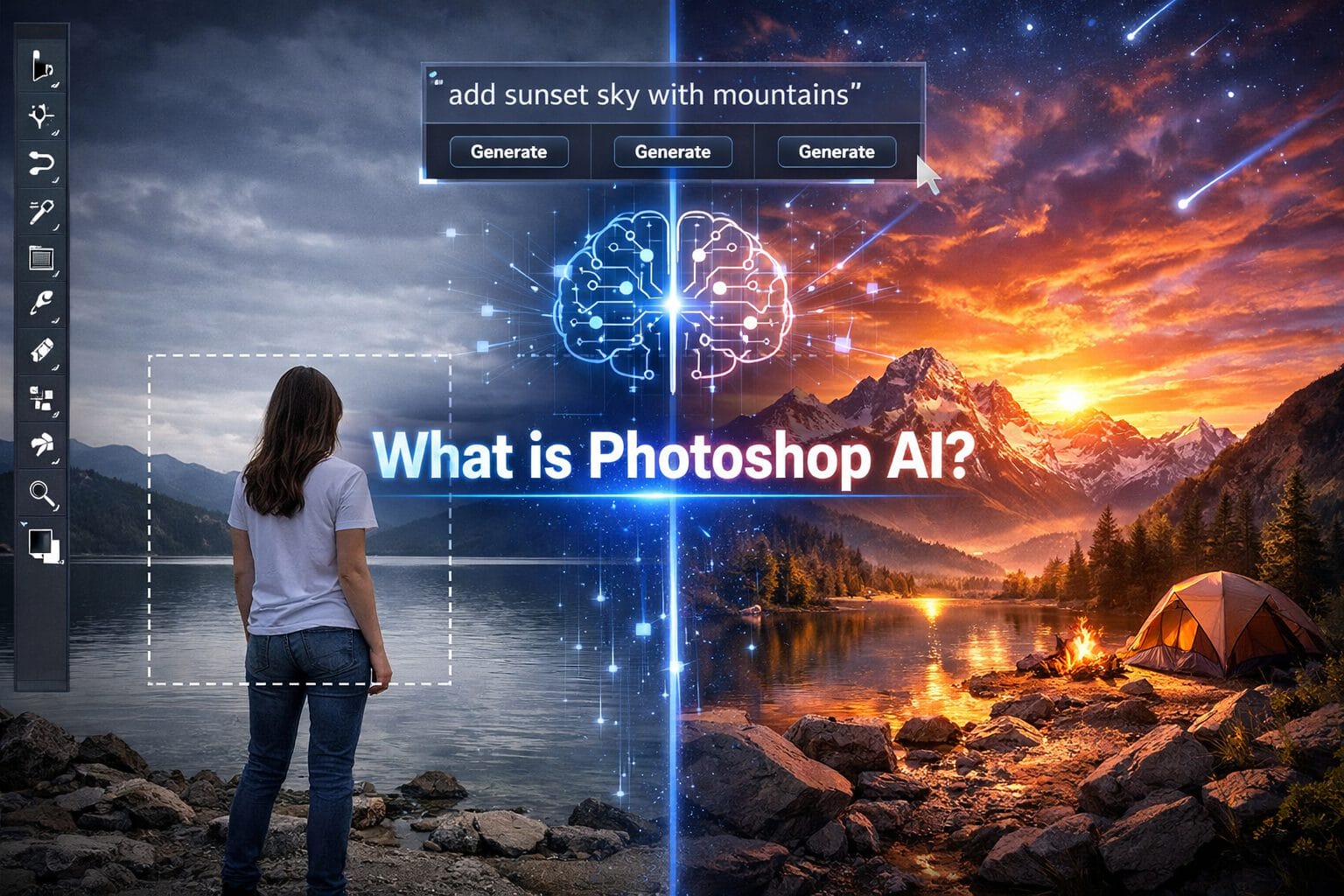
What Is Photoshop AI?
Adobe has fundamentally transformed digital image editing by embedding artificial intelligence directly into Photoshop. Photoshop AI refers to the comprehensive suite of machine learning models and generative algorithms integrated into the software, primarily powered by Adobe Firefly. Rather than replacing traditional editing techniques, these intelligent tools augment creative workflows, allowing designers, photographers, and digital artists to execute complex visual tasks in seconds. The result is a paradigm shift from labor-intensive, pixel-level manipulation to prompt-driven, context-aware editing that respects artistic intent.
Core Capabilities and Generative Features
The most recognizable component of this ecosystem is Generative Fill. By analyzing surrounding context, lighting conditions, and spatial perspective, the AI generates photorealistic additions or removals based on simple text prompts. This functionality seamlessly extends to Generative Expand, which intelligently stretches canvas boundaries while preserving compositional integrity and background continuity. Beyond generation, Adobe has deeply integrated AI into established utilities like Select Subject, Content-Aware Workspace, and Neural Filters, which automate skin retouching, color grading, and artistic style transfer with remarkable precision.
These capabilities are not experimental novelties; they are production-ready utilities engineered for professional pipelines. Whether you are compositing e-commerce photography, restoring historical imagery, or rapidly prototyping visual concepts, the AI eliminates repetitive manual labor while maintaining granular creative oversight.
Under the Hood: Architecture and Processing
Photoshop AI operates on a sophisticated hybrid architecture that balances local processing with cloud-based inference. The software relies on Adobe Firefly, a family of generative models trained exclusively on licensed and copyright-compliant visual datasets. When a user inputs a text prompt, the system parses the semantic meaning, cross-references it with learned visual patterns, and synthesizes an output that aligns with the existing canvas metadata. Crucially, all AI-generated elements are applied as editable layers, ensuring that professionals can adjust opacity, refine masks, or completely discard outputs without compromising the original file integrity.
Professional Considerations and Workflow Strategy
Despite the impressive speed and flexibility, professionals must deploy these tools with strategic discipline. AI outputs can occasionally exhibit subtle artifacts, mismatched lighting, or structural inconsistencies that require manual oversight. Knowing when to trust automated generation versus traditional retouching is essential for maintaining brand authenticity and client trust. Furthermore, while Adobe provides clear commercial usage guidelines, designers should routinely verify licensing documentation before deploying AI-assisted assets in large-scale marketing campaigns or regulated industries.
Actionable Takeaways for Modern Creators
- Craft precise prompts: The engine responds optimally to specific instructions detailing subject matter, lighting direction, material textures, and compositional placement.
- Maintain non-destructive practices: Always generate assets on independent layers to preserve full editability and enable seamless blending with adjustment tools.
- Hybridize your workflow: Use AI for rapid ideation and background generation, then apply manual color correction, typography, and fine detail work for publication-ready results.
- Plan for connectivity and latency: Cloud processing requires a stable internet connection and may experience variable response times during high-traffic periods. Factor this into project timelines.
Conclusion
Photoshop AI marks a mature, production-focused evolution in digital design. By integrating generative models directly into an industry-standard environment, Adobe delivers a platform that accelerates output without sacrificing creative control. Professionals who strategically incorporate these features will experience measurable efficiency gains, broader creative flexibility, and a resilient, future-proof workflow. As the underlying models continue to advance, proficiency with AI-assisted editing will rapidly shift from a specialized advantage to a fundamental industry requirement.