
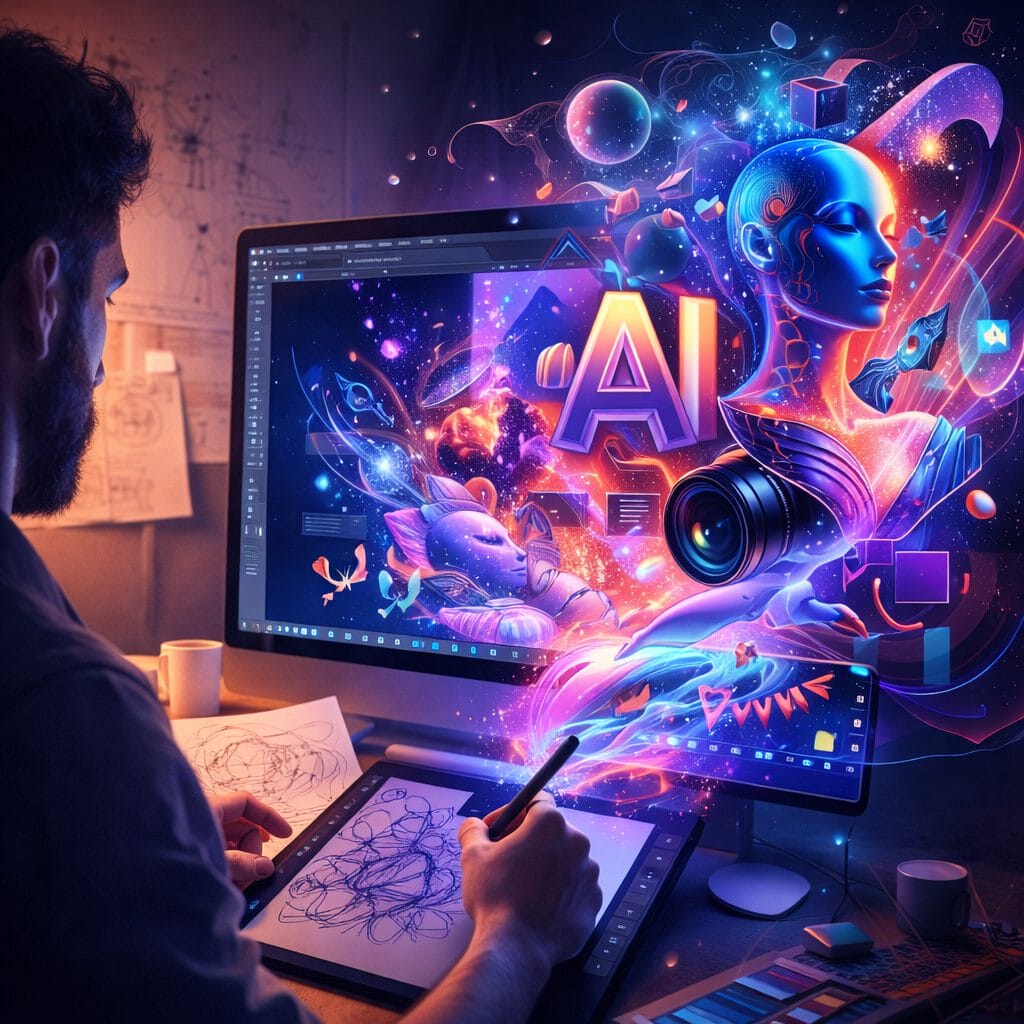
Understanding the Core of Artificial Intelligence
Artificial intelligence, commonly abbreviated as AI, represents a transformative branch of computer science focused on building systems capable of performing tasks that traditionally require human cognition. Rather than following rigid, pre-programmed instructions, modern AI models analyze vast datasets, recognize complex patterns, and generate predictive or creative outputs. This fundamental shift has moved technology from simple automation to dynamic problem-solving.
At its foundation, AI operates through algorithms designed to simulate human reasoning, learning, and perception. These systems do not possess consciousness or intent. Instead, they rely on mathematical optimization and statistical probability to deliver results. For professionals in creative and technical fields, understanding this distinction is crucial. AI is not a replacement for human expertise; it is a sophisticated tool that amplifies capability and reduces repetitive friction in daily workflows.
Machine Learning vs. Generative AI
Within the broader AI landscape, two primary paradigms dominate current applications. Machine learning focuses on training models to classify data, detect anomalies, and predict outcomes based on historical inputs. Generative AI, on the other hand, specializes in creating original content. By learning the underlying structures of text and imagery, generative models can produce new variations and synthesize complex media from simple prompts.
Both approaches share similar architectural foundations but serve different operational goals. Machine learning optimizes decision-making, while generative AI expands creative possibility. Recognizing this separation allows professionals to deploy the right technology for specific project requirements, ensuring efficiency without compromising artistic integrity.
How AI Transforms Creative Workflows
The integration of artificial intelligence into professional design environments has fundamentally altered how visual assets are produced and delivered. Traditional workflows often involved hours of manual adjustments, layer management, and repetitive corrections. AI introduces intelligent automation that handles these time-consuming processes quickly, freeing creatives to focus on high-level strategy and conceptual development.
This transformation extends beyond mere speed. AI enhances precision by analyzing pixel-level data, understanding contextual lighting, and maintaining structural consistency across complex edits. When designers leverage these capabilities, they achieve higher output quality with reduced fatigue. The result is a more sustainable creative process that balances technical execution with artistic vision.
Practical Applications in Photoshop
Modern image editing platforms have embedded AI directly into their core toolsets, demonstrating how artificial intelligence operates in real-world scenarios. Features such as content-aware fill, neural filters, and generative expand utilize deep learning models to reconstruct missing details, adjust color grading, and extend canvas boundaries seamlessly. These tools analyze surrounding visual information to generate contextually appropriate results.
For professionals, these applications translate to measurable time savings and enhanced creative flexibility. Instead of spending hours refining selections, designers can direct the software to execute complex tasks with minimal input. This shift elevates the designer role from manual operator to creative director, overseeing AI-assisted outputs and making strategic refinements.
Actionable Steps to Integrate AI Safely
Adopting artificial intelligence into a professional environment requires a structured approach. The most effective implementations prioritize workflow compatibility, data security, and output verification. Professionals should begin by identifying specific bottlenecks in their current processes and selecting AI tools that address those precise challenges. Targeted integration delivers consistent value.
Best Practices for Professional Results
- Start with defined objectives: Clearly outline what you expect AI to accomplish, whether it is background removal or concept generation. Measurable goals prevent scope creep.
- Maintain human oversight: Always review AI-generated outputs against your original creative brief. Automated tools can introduce subtle inaccuracies that require manual adjustment.
- Protect intellectual property: Verify the licensing terms of any AI platform you use. Ensure that generated assets comply with commercial usage policies.
- Optimize prompt engineering: Provide clear, specific instructions when working with generative models. Detailed context and constraint parameters significantly improve output quality.
- Document your workflow: Keep a record of the AI tools used and the final edits made. This practice ensures transparency and supports consistent quality control.
Conclusion
Artificial intelligence is no longer an experimental novelty; it is a foundational component of modern creative workflows. By understanding its core principles, recognizing its operational boundaries, and implementing it strategically, professionals can unlock unprecedented efficiency. The most successful practitioners will not be those who rely entirely on automation, but those who master the synergy between human expertise and machine intelligence. Embracing this balance ensures long-term relevance and higher-quality deliverables in an increasingly digital landscape.